Everything Is Going To Be Okay: An Interview With Bruce Eric Kaplan

If you read The New Yorker, the name Bruce Eric Kaplan (or BEK) is one you are familiar with, he’s spent the last twenty years as a single-panel cartoonist for the magazine. In his spare time, he’s released seven books and was a screenwriter for cultural landmark shows like Seinfeld and Six Feet Under (one of my absolute favorite TV series of all time). This week he’s releasing his eighth book, Everything Is Going To Be Okay, a story for the twenty-somethings reaching the milestone of graduation. I got the chance to get on the phone with Bruce to catch up about the new book, geek out on his past, and learn about his new project with Judd Apatow.
Your new book Everything Is Going To Be Okay, it’s your eighth book correct?
Something like that. You would think I’d know, but eighth sounds right.
I was trying to keep tally of everything I found and this looks like it’s going to be the eighth book. I liked the quick read and the message behind it.


Thanks!
How did you come up with the idea for it?
I came up with the idea because I always loved graduation speeches. I love reading them in the newspaper, I love watching them when they’re on TV in May. I remember one day like fifteen years ago I sat in bed one Sunday and watched like eight graduation speeches in a row and it was great, I just had the greatest day. I think the whole idea of what a graduation speech is and what it’s supposed to do is just interesting to me. That was the beginning of the book, and I was thinking, “what would be a funny way of doing it?” Hopefully this is it.
The first thing I thought of was all of the graduation speeches that I sat through in high school and college.
I’ve actually never sat through a good one. That’s the funny thing. I love them, reading them, and seeing them on television. In person I never had a good one.
I was thinking the same thing. When you’re in high school it’s usually a high profile local that talks about something. Then in college it’s almost like, “I want to get the hell out of here.”
At my college one I was dying, I remember it was so hot and this woman whose name I’m not going to give was there, she wasn’t even a famous person but was married to a famous person and she gave a speech that went on for two decades. I guess that is one of the reasons for this book.
So it was longer than Edmund’s speech in the book?
It felt longer.
I did the math in my head and I figured about eight months was how long Edmund’s speech was in the book.
Yeah something like that.
The book features the characters of Edmund and Rosemary. Two characters you’ve actually used in previous books?
Yep this is the third book that they have appeared in.
Are they based on anyone in your life?
Well there are definitely similarities to me in both of them, and to my wife in Rosemary.
The grounded, “It will be okay” type of personality? Because I’ve noticed many people who’ve tend to do great things have that kind of person supporting them.
Yeah I don’t think I got that part from her. *laughs* Me and my wife tend to be the kind of people who just egg each other on with, “everything is not going to be okay!”
So you don’t live by the motto of, “everything is going to be okay?”
BEK: No I’d like to, it’s what I aspire to.
Well it’s a good aspiration since you’ve had a pretty terrific career in different media. So if you approach life in that, “it will all work itself out” motto it will work out well?
Absolutely, I aspire to it and I think everyone should too.
We’re a comedy website so let me ask you some comedy questions. You’ve written for some pretty high profile TV shows like Seinfeld and Six feet Under. They’re very different because one is comedy show and the other is a very dramatic show with comedy in it. Was there a different approach you needed to take when writing them?
Truthfully, it’s the same approach in it’s about understanding who the people are and once you really know them, being open to what they would say. It’s the same approach even though they say different things because they are different people in different universes. Seinfeld is a more stylized, hyper-reality, while Six Feet Under is a more of a grounded kind of thing.
Do you find it difficult to put elements of comedy into something like Six Feet Under which is so serious?
No truthfully, in the writers room of Six Feet Under we laughed constantly. I mean it was a writers room that was constantly laughing and being silly. So even though there’s a darkness to the subject matter of the show, it was a awareness of the irony of life, and the awareness of all situations. That was definitely part of that world too. There were sad parts too, I mean I would cry writing the Six Feet Under script. I only cried once in the writer’s room. *laughs*
Ha! You should keep the crying to yourself. Yeah, Six Feel Under is hands-down one of my favorite series of all time and I’m sure you’ve heard that from many people because it addresses the ups and downs of life. You are dealing with death so much in the show you have to be able to just laugh at it.
It was very meaningful to me, but ironically I feel Seinfeld talked about all of the same issues of Six Feet Under, but just in a different way. It’s a lot of, “why am I here?” “What am I doing here?” “Why is everyone else here?” So it does have that similar existential prism? It’s just a more humorous one I guess.
How long have you been doing the comedy strip for The New Yorker?
I’ve been doing comic strips for The New Yorker for twenty years now.
As a kid I fancied myself a cartoonist and I’ve always wondered how difficult it is to come up with something consistent like that for twenty years?
It’s miserable *laugh* I mean it’s miserable to come up with anything. There is that moment in Everything Is Going To Be Okay where Edmund is writing his speech and he is just looking at the page and everything is blank, and I feel that constantly. What’s great about writing a script or a book is once you’re in the middle of it, you can just flow. Whereas with cartoons, you have to generate so many and have so many different ideas that you’re constantly building a skyscraper from the ground up. It’s like you’re always starting from scratch and that’s miserable. That being said I sometimes have more fun writing for cartoons that for TV shows.
How much of the subject matter in the cartoons do you pull from real life?
Almost all of it. If it’s not happening to me personally, then it’s something I’m thinking about because I’m witnessing it in front of me. Or I’m reading about it because it’s in a newspaper. I mean it’s all coming from my own experience but some of it is closer to my internal life.
Are you a person that walks around with a notepad or tape recorder and just records every idea as they come?
Not usually, I tend to just wait until I am at my writing desk or drawing desk and sort of bang my head against it to see what falls out.
As far as the animation is concerned, how important is it to you? It’s simple in execution and it has an “everyman” quality. Is this important for you to relate that way?
Oh my God, no! I am doing the best I can. I mean I’m struggling. I didn’t go to art school, so I’m self-taught as an artist, so for me I am doing the best I can. It may appear simple but it’s like Mt. Everest sometimes. For example, if I have to draw something that’s not a lamp, I’m in trouble. I still can’t draw sheep! Every time I try and draw sheep, it comes out like a horse. Cows are the worst actually. Sheep used to be really bad for me, but cows are the worst now. I wish I could draw a cow.
What was the toughest thing to draw in the new book? There was some complicated stuff in there, you even tackle some Dr. Seuss in it.
That one I felt okay about. There’s one involving a car that I struggled so badly with. The cars I find to be a total struggle.
From you description, I had it pegged to be the drawing of the Moo-Cow creamer.
That one I enjoyed. I don’t know how it came out, it might not have came out that way apparently. *laugh*
No, no, I’m not saying it didn’t come out well. I’m just saying it’s more about the idea than it is about looking flashy.
Yeah they’re not heavily detailed pieces, that’s for sure.
Gotcha, I didn’t want to say they were crude, but there is a simple design element to them.
Yeah I agree, and even to this day, the art editor for The New Yorker will say, “Bruce I love this because you use your limitations to draw.”
*Laughs*
Did he see the picture of Tootsie? Because I think you nailed it with Tootsie.
Oh no he hasn’t seen it, I’ll show it to him.
Be like, “look we’re going to incorporate Tootsie into a couple of upcoming single panels.”
So what’s next for you? I heard a rumor that you are planning on working with Judd Apatow.
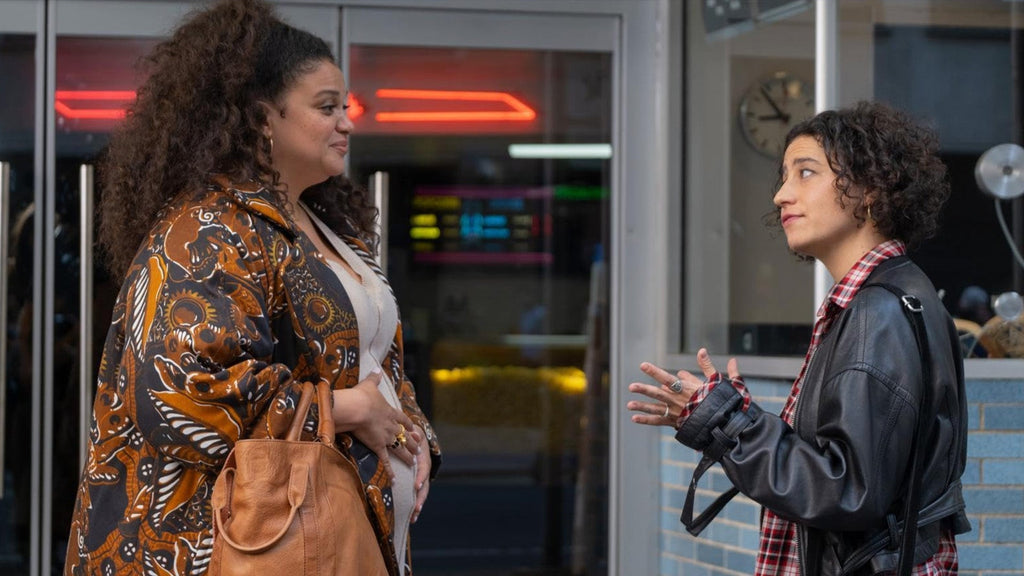
Yeah, I’m having the best time actually; I’m working on this new half hour show for HBO created by Lena Dunham and executive produced by Judd Apatow. It’s called Girls and it’s going to come on sometime in 2012 I think.
And what’s the idea behind Girls?
It’s really interesting to me personally. It’s about three girls in their twenties, just graduated college and live in Brooklyn. It’s that time of your life where you’re trying to figure out who you are and what you want to be. It’s what it’s like to be young in today’s world.
So you seem to have this demo of post-graduation twenties/thirties nailed down. Do you pull from that because it was a good time in your life? How do you find the inspiration to talk to that generation?
I think I connect with the idea of who am I and why am I here. Which is a real central thing to that time in your life. Maybe I’m arrested and still grappling with it? But I feel that certain people never stop grappling with it for whatever reason; I must be one of those.
Tying it in with something you said earlier, it seems a lot of projects you’ve worked on has everyone in that age tackling that issue in their own way.
Yeah.
*laugh* Well you’re very good at it.
Thank you.
I thoroughly enjoyed reading the book, it’s one of those books that could potentially be the modern day Oh, The Places You’ll Go. A book everyone reads to their graduates, and maybe next to that graduation speech that was animated to audio a couple of years ago about wearing Sunscreen.
David Foster Wallace had a famous one a couple of years ago as well.
Yes, totally!
I actually stayed away from watching them while I was writing the book because I wanted to keep my own sort of take on it. But now that the book is done I am going to take a look at the David Foster Wallace one, because that is the one everyone brought up to me.
Rob Schneider recently released one too. But I think it was to the GED class; I’d imagine you would be saying something different to the GED class than the honors class.
Maybe, we’re all one organism.
Thank you for your time, I appreciate letting me read the book, and personally I think you nailed the cars.

Pingback: The New Yorker invites you to caption cartoon used in Seinfeld episode | The Laugh Button